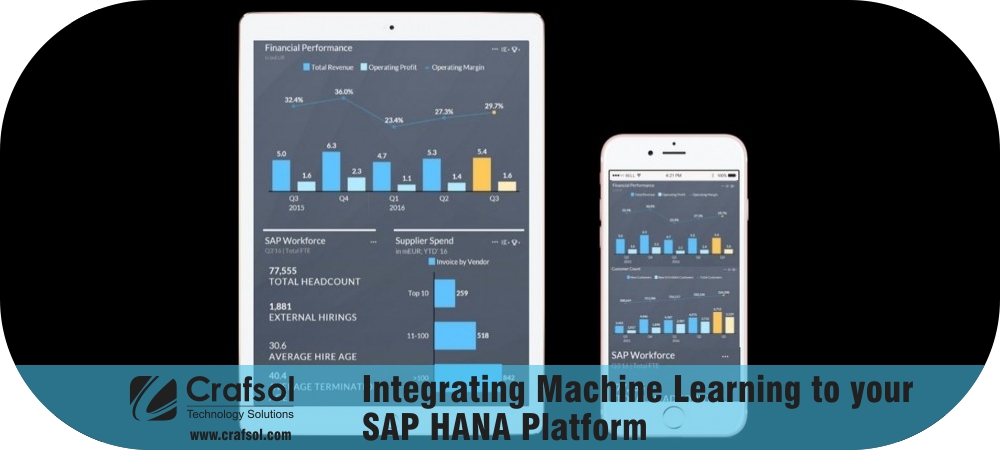
Integrating Machine Learning to your SAP HANA Platform

Artificial Intelligence is one of biggest drivers of today’s digital world. AI has already become the part of our everyday life.

Machine Learning is a subset of AI that empowers the system to automatically learn and improve from experience without being explicitly programmed. The success of Machine Learning depends on the quantum of data. It requires large sets of data augmented with a whole range of algorithms.

As technology advances, enterprises are migrating or have already moved to SAP ERPs, so for better success it is best to sync Machine Learning with your SAP database.

Running Machine Learning algorithms where your data resides—in the database—can help reduce latency and alleviate other delays that arise when copying data to another server.


The tango between Machine Learning and SAP

SAP HANA Predictive Analytics

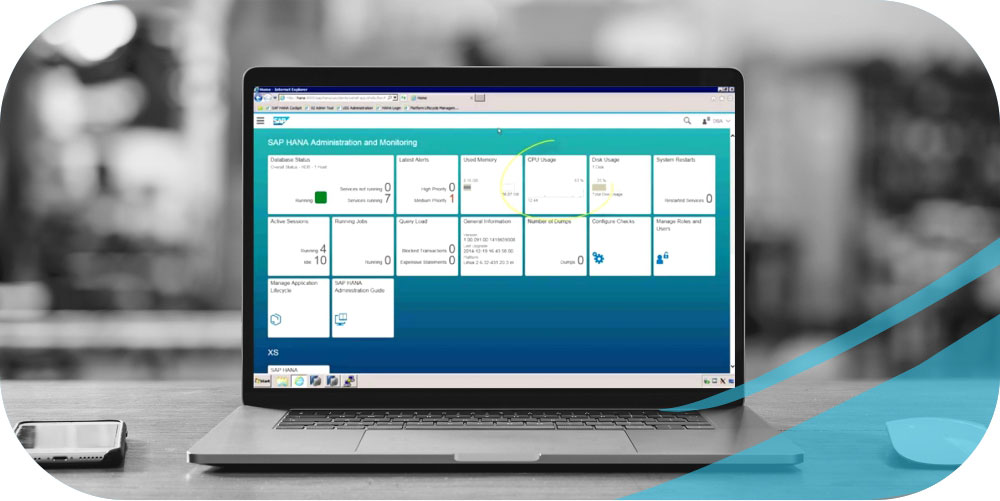
SAP Hana’s Predictive Analytics provides machine learning capabilities through in-memory database. SAP Hana predictive analytics library (part of AFL) provides data analysts and developers with automated, wizard-driven machine-learning capabilities and it can create algorithms to build predictive models and provide better controls for the data scientist.

PAL also has several algorithms that ML learns and continuously updates for dynamic predictions.

Open-Source Machine Learning

SAP Hana also facilitates open source machine learning frameworks, R integration is one of them. R is an open-source programming language designed for statistical computing and advanced analysis. Users can write R code in HANA and then mix and match those programs with PAL Algorithms.

Main advantage here is that businesses can utilize the power of SAP HANA and user-expertise for scalability as well as performance through R scripts

HANA inbuilt Machine Learning Integration

SAP’s Extended Machine Learning Library (EML) provides machine learning inference on data at rest or in motion. ML models can be built in tens or flow using python packages to build complex deep learning integration.

Deep learning brings in ability to solve complex inspection and build algorithms, Identifies every defect outside if the set tolerance and processes prediction at very fast pace.

Crafsol Technology Solutions has in-depth experience in SAP implementation and has also worked on some of the challenging Machine Learning projects, If you wish to take best advantages of ML from SAP platform, get in touch with our experts.


Machine Learning & AI for Cyber Security

In last decade we have seen great development is Machine Learning, Artificial Intelligence and its impact in everyday lift of Human ecosystem.

AI and ML typically helps machines or systems to automatically learn and improve from experience without being explicitly programmed. ML can build algorithms on data that is classified or unclassified, with partial information or no information been provided.

Cyber security also is one of the area where AI and ML can play pivotal role. lets take an example, if your computer or machine is made able to to decide what is good for it and what is bad for it while accessing, this way one machine itself finds new Malware or Anomalies when it faces for the first time.

AI and ML can be used to build this capability, it can identify and safeguard the systems from ever changing cyber world. Traditional security tools may run short to point out the control the cyber attacks.

Building the system that can fight threats

Malware or Cyber attacks always evolve themselves, hacker constantly build upon their previous works, adding new features, upgrading abilities to crack current systems that are blocking its attacks.
AI coupled with ML learns from the information available from previous attacks (data) and build algorithms to predict, identify and control future ones which can be similar category or style

Layered Defence

Basic principle of Cyber security is creating a defence that layered and is in depth. Keeping everything updated such as constant updates, scanning computers every time and everything user accesses is one thing.

Quickly scanning the content user is trying to access, identifying if it is good or bad is one element that every cyber security tool has in build right now, however time involved in doing it is quite time consuming.

this is exactly AI and ML can make the difference, A properly-trained AI/ML model can deliver decision on good or bad files in just few milliseconds.

Resource optimization

Applying machine learning and artificial intelligence to improve cyber security saves an organisation a considerable amount of time and money that would have otherwise been spent by cyber security experts.

Machine Learning quickly excess large pool of data instantly and learn and analyze from it. Systems generate lot of alerts and unautomated attention can buildup lot of work security team. ML can learn from historical data and create resolution on its own.

Artificial intelligence and machine learning is all set to become one of the front runner of next-generation security, enabling elevated degrees of cyber security.

Crafsol ML and AI services builds highly advanced and customized solutions. We are focused on improvisation of the algorithms after the machines have undergone some experience in identifying objects based on defined attributes which makes our approach unique.

Optimising Customer Support Services with Machine Learning

Enterprises have been using Machines to improve efficiency and productivity for long, though it may be advance machinery or shifting to robotics or cobots to further improvement, the need to increase efficiency is consistent. Machine Learning is the next thing which is helping enterprises to use the machines to improve and work more efficiently.

Customer Support is undoubtedly one of the biggest cost centers in modern-day operations, for big or medium scale businesses.

And Customer Support is also considered as one of the most complex parts as well.
Well does it really need to be one? the straight answer is ‘No“

Machine Learning is already set to bring in a major role in resolving challenges in a customer support function.

What is Machine Learning (ML)

ML is one of the parts of artificial intelligence (AI), it is a set of techniques that provides systems or computers an ability to automatically learn without being actually programmed. It can read the data whether it may be structured or unstructured and discover insights.

How does it help in Customer Support


When it comes to Customer support ML provides a higher level of convenience to the customers and efficiency to the support staff.
CS means a lot of data, of which the major part is an unstructured one. This data that is gathered through everyday conversion and communication which contains deep insights, ML when used intelligently can be helpful in understanding the customers, their thinking, wishes and so on.

How is Machine Learning used in the CS environment?

Here are quick top picks

Understanding the Intent

Most of the time your agent does not know why is customer contacting you or where probably he is asking for help.

Machine Learning can help CS agents predict the same. Machine learning collects data about a customer’s previous browsing, geo-events, contact pattern, and other online behaviors. That allows agents to plan and prioritize the customers need. In a way your agent provides personalized services to the connecting customer, assuring elevated user experience.

Timesaving – a win-win situation

Well, what is mostly observed by the researchers, people prefer getting in touch with customer support is through chat or messaging app option. that’s where chatbot comes in the picture.

While, chatbots are something that is equally disliked by people, when used intelligently it can have a greater impact. for instance, if a chatbot can extract what exactly the customer is looking from the text types, further tag it correctly, to direct it right customer support specialist, can bring in a win-win situation for both.

it saves time for the customer, saves time for an agent, reaches the right SME and improves the overall experience

Predictive Service

With IoT, companies are now able to practically track their devices even while the customer is using it. For example, a Smart Machine connected to the internet can send back a signal to the manufacturer when a fault or unusual operation takes place. The manufacturer can get back to owning the company to inform arising issues with the required solution.

Virtual Assistance

Virtual assistance is helping customers during their journey, providing insights to customers as well as feeding the analytic program at the back-end for future reference.

ML can help a enterprises to virtually assist the customer right from buying stage to finding out resolution when he is facing any issue. ML can also help in pushing a product which customer has checked or liked based on his online behavior, it can trigger alerts or updates to the customers.

While these are only a few things listed here, there is a long list where ML can help in optimizing Customer support.
To list a few – customer data capture, classification, proactive emailing, perform root-cause analysis of repetitive instances, reduce interaction time.
Crafsol with its ML and AI services has strong experience of building custom solutions for enterprises.

Get in touch to know more how we can help you in your fasten your customer support services.

https://www.zendesk.com/blog/machine-learning-used-customer-service/
https://freshdesk.com/customer-support/machine-learning-optimizing-customer-support-blog/
https://www.forbes.com/sites/forbestechcouncil/2019/04/24/using-machine-learning-to-improve-customer-service/#298ccf985892
https://www.cognizant.com/perspectives/how-machine-learning-can-optimize-customer-support

Pharma 4.0 – A Wave in Making!

Industry 4.0 has brought lot of change in many sectors like transportation and logistics, manufacturing, aviation, and oil and gas production. New waive that is coming up is Pharma 4.0 i.e. Implementation of Industry 4.0 in pharmaceuticals

Understanding Pharma 4.0

Similar to Industry 4.0, Pharma 4.0 refers inter-connectivity, automation, integration of AI and ML to make it possible to gather and analyze data across machines, enabling faster, more flexible, and more efficient processes to produce higher-quality goods at reduced costs.

Why to move towards pharma 4.0

Remaining competitive, ensuring to keep market place in tact is pushing pharma manufacturers to improve productivity ensure better control on monitoring. harma 4.0 technology allows for continuous, real-time monitoring of manufacturing processes so any drift away from specified parameters can be predicted and rectified before it turns into a deviation, avoiding the associated down time and loss of product.

Wining over existing control strategies

Pharma industry always had automated process control right from beginning of 90s. But this relatively old system which only alerts when already damage is done. Pharma 4.0 on other hand is proactive in nature. By using sensors and using continuous monitoring techniques, integrated with AI and analytics provides predictive analysis and a world of other business insights that are currently unavailable because they’re buried in unstructured, dispersed, incomplete data.

Role of Big Data

Big data analytics draws data from sources that have traditionally been disconnected from one another, and looks for relationships and trends that were previously undetectable. For example, data from the online inspection system described above can be combined with that from equipment maintenance and engineering systems to streamline maintenance schedules; combining production data with that from sales and dispatch systems can streamline production planning.

How will this transform to a waive

Although pharma is very precautious industry, which requires tighter control and is coupled with very strong statutory norms. However, still Governments, regulators are taking every possible step help enterprises to move towards Pharma 4.0 soon Pharma 4.0 is be waive in itself

Crafsol with its leaders, who have strong understanding of pharmaceutical industry, is ready and keen to help companies to start Pharma 4.0, get in touch with our team now.

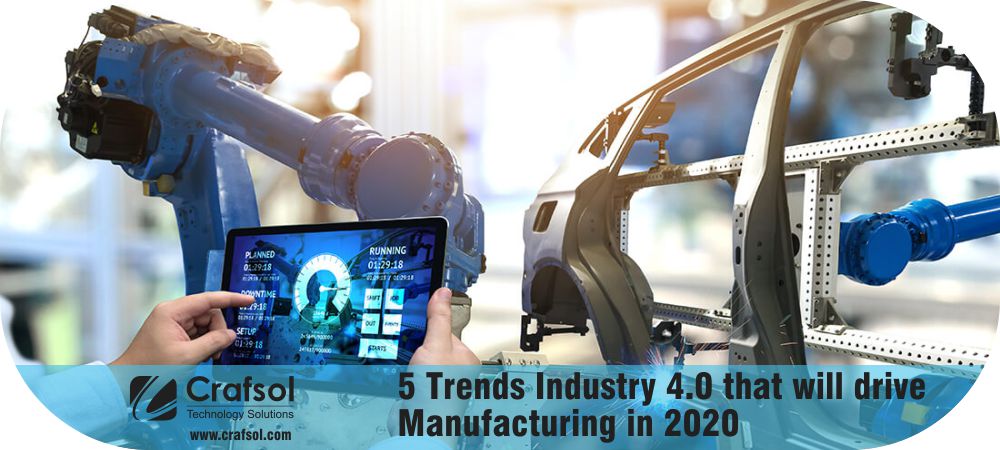
5 Trends Industry 4.0 that will drive Manufacturing in 2020

Industry 4.0 and allied technologies are already driving a huge change when it comes to Manufacturing. Although technologies in manufacturing are advancing at very fast pace industry 4.0 is already to set to take it to the next level.

Industry 4.0 has already benefiting manufacturers by increased visibility into operations, substantial cost savings, faster production times and the ability to provide excellent customer support.
As Competition is growing, The only way manufacturers can stay ahead of competitors and win market share is getting best out of technologies. Those companies who want excel and not just survive are on set to ripe best out Industry 4.0

In this month’s Newsletter we take a look at 5 trends that drive manufacturing in 2020

Digital Twins

Although digital Twin technologies have been around 2003, real utilization is up when IoT came into the picture. Digital twins are virtual replicas of physical devices that data scientists and IT pros can use to run simulations before actual devices are built and deployed. They are also changing how technologies such as IoT, AI and analytics are optimized.

IoT

Manufacturers are already leveraging the benefits of IoT by connecting their existing manufacturing infrastructure to internet using unique devices. In 2020 more and more companies even from SME’s will invest in IoT to leverage more informed decisions to achieve increased efficiency, improved safety, meeting compliance requirements, and product innovation.

Increased use of Cobots

Markets have welcomed Cobots positively and some research show that by 2025 investment in cobots will be 12 billion USD. Cobots create opportunities for manufacturers to improve their production lines, increasing productivity while keeping employees safe. Cobots are compact and affordable and easy to use.

AR & VR

Assistive technologies, such as augmented reality (AR) and virtual reality (VR), will continue to create mutually beneficial partnerships between man and machine that positively impact manufacturers. These technologies help businesses work more effectively while also making them more efficient. Helping in several ways like product design, production line development, driving OEE improvements, technical and engineering support, training, team collaboration, inventory management, and more.

Smart Factories

Businesses, to stay competitive, are striving hard to make their production lines more efficient, effective and utilize the resources to fullest all this to achieve better productivity.

The smart factory represents a leap forward from more traditional automation to a fully connected and flexible system—one that can use a constant stream of data from connected operations and production systems to learn and adapt to new demands.

While above is just a quick list of trends that will be seen in next year, it does show the opportunities that exist in 2020 and beyond for manufacturing companies with a forward-thinking and innovative outlook.

Want to know more about how Crafsol can help you?
Get in Touch.

RPA coupled with AI to Drives digital transformation to the next level

With increasing competition, businesses, globally moving towards becoming more agile and effective. This has forced them to push themselves to digital transformation. Gaining productivity, efficiency and better customer orientation is something enterprises aim through digital transformation.

Ther are multiple technologies that have been in the market to help the organizations to achieve their aspirations. But one which has proven itself with quick ROI is RPA (Robotic Process Automation)

RPA coupled with AI can deliver true value and long-term sustainability.

Leveraging the Robotic Process Automation (Correctly)

In the past few years, RPA has automated low value, repetitive tasks and helped the organizations to lower the costs. RPA replaced human performing routine tasks by automation and enabled employees to focus on more challenging, strategic and decision making tasks.

Having said that, there are still many tasks that RPA can take over if coupled with AI which most organizations are failing to achieve.

How RPA+AI helps

RPA when empowered by AI just goes far beyond just doing routine tasks. It can practically imitate human response through machine vision, speech recognition, and pattern detection capabilities and can handle structured, semi-structured, and unstructured data.

Further machine learning can take this next level by enabling robots to learn how to process or improve the process when work is not exactly repetitive.

Implementation of RPA

Even though the implementation of RPA looks quick task, it is important to assess the implementation models and overall RPA feasibility. Here are a few key points to ensure success

  1. Implement the technology with full commitment, understand it relatively new to your organization, will disrupt your current operations for a while.
  2. Select the Partner who has a deep knowledge not just of technology but also of business analysis, this is important for effective mapping
  3. Recognize the targets, milestones, and benchmark, ensure effective governance with a comprehensive approach towards identification and development.

Crafsol’s RPA services

Crafsol with experts has strong process mining capacity and the ability to deliver a complete range of platforms for the entire digital transformation process. Get in touch with our representative to know more

Interested?

RPA and its Impact Across Industries

Implementing Automation and Process Simplification has been key concerns for businesses for the last 2 decades, alongside effective utilization of resources for better output and value addition is another point enterprises eye on.

RPA is ideal for tasks that are repetitive and relatively structured in nature. However, in-coming times, with the advancement of technology, RPA will be poised to take more challenging, analytical and important tasks.

RPA has been a point of discussion for a long time and now many top enterprises are ripping the benefits of it. If reports are to be believed then more than 80% of large scale companies will deploy RPA in the next 5 years.

RPA and its Impact

Profit maximization and Productivity gain are always on the radar of businesses. RPA is rightly fit software for these aims. Many companies have implemented it on a smaller scale and grown on to increase it scope multifold. Sectors like BFSI, Insurance, Healthcare, and Manufacturing are ripping the best benefits of RPA.

In this blog, we look at how RPA is helping these Sectors and benefits that derive.

BFSI

BFSI and in particular Banking involves a lot of repetitive manual activities, and if a small mistake happens due to manual error, the repercussions are huge. Deployment of RPA integrated with AI has actually reduced this burden from the BFSI sector. RPA can provide better customer service and respond like a human employee in lesser time. RPA improves the quality of the compliance process and increases productivity with 24/7 working.

Offshore/Outsourcing

Well, the sector which best benefited was BPO’s If there’s one area of business disrupted by robotic process automation (RPA), it’s outsourcing. RPA is itself a type of outsourcing, but instead of outsourcing to a human being in another country, you’re outsourcing work to a software robot. It provides better accuracy than humans, faster turnouts, reduced errors and most importantly consistent support of 24/7 operations.

Insurance

Insurance companies are immersed in back-office forms as most of the documentation process is still paper-based. RPA is analyzing these vast volumes of data and translate them into insights to work on it. Automation is increasing efficiency by adding significant value to enterprise processes. Numerous insurance agencies are focusing on automation to streamline their business procedures and attend new customers. RPA brings in almost processing time to 10%

Healthcare

Healthcare was using outdated systems that were making healthcare workers to constantly work on repetitive tasks, With RPA these systems are being advanced helping the process to run faster. For example, many healthcare companies struggle to verify health insurance eligibility for potential customers due to highly manual processes. With RPA, the medical supply distributors can verify thousands of patients’ insurance eligibility daily while saving time and cost.

Retail

RPA has become one of the best ways of improving service delivery in the retail sector. Operations like taxation, auditing, or HR are some of the areas where RPA is best suited. One of the challenges for retail stores is the back office file report. Reports from hundreds of stores, gathered together to validate the cash register. These reports are now recorded in individual file transfer protocol server with the help of RPA.

Automotive Manufacturing

With RPA, the auto companies shifted gears. They were able to automate crucial back-office processes, and also identify and improve deficiencies within operations. RPA helped to improve real-time monitoring, production capacity, inventory controls in the auto sector. By automating emails, procurement processes, as well as the digitization of paperwork, the companies are now able to attain better control and ensure optimum levels of skills employment.

Benefits of Robotic Process Automation

Increased productivity, better quality work, and stronger market position are some of the top benefits besides cost savings. Relatively inexpensive and disruption free-solution allows companies to take advantage of RPA solutions quickly. Also, companies are trying firsthand to ensure that their RPA investments offer benefits beyond cost savings.

Want to know more about how RPA can benefit your enterprise?
Get in touch

SAP S/4 HANA is Really Costly – the Myth

The price of SAP HANA has always been a topic of concern ever since its inception. Many Enterprises end up thinking if they can afford it In this blog we discuss on a myth about the cost associated with Sap HANA.
Many businesses take a stand instead of migration to SAP HANA they prefer to run on existing platform an update as per the need. Even after understanding the advantages it offers. This is main reason why companies refrain from this migration.
Businesses end up worrying about cost of implementation and acquisition. Cost attached to purchasing of new hardware, systems and licenses and so on. And end up zeroing on thought SAP HANA is costly as compared other platforms.

Reality: It can be way cheaper the imagined

Reality is if thought on short term cost, migration to SAP HANA generally involves higher costs than other database platforms. In-memory technology costly than conventional one yet requires disk drives or flash memory for backup.
But accepting fact that this is a better method of data storage and reduces data footprint, this usually will not immediately compensate for the additional expenses.

However, these high end cost can be avoided, businesses can transfer their SAP HANA systems to a cloud service provider. Some hardware upgradation still required for this method, but it does enable enterprises to start small and grow in line with actual demand.

Migration to cloud also eliminates resource requirement of admins, as the cloud provider administers the systems. With this option, there is no need to invest time and resources into additional training for SAP HANA.
In terms ROI, SAP HANA offers huge potential for saving on long run basis.

SAP HANA enables businesses to consolidate data in single system. This minimizes hardware and software costs and also increases efficiency.

SAP HANA – an investment to look at long-Term

While discussing all this, it pertinent to consider opportunities and solutions that SAP HANA offers.
For example,

    • SAP HANA helps to reduce expenses and increase valves with its real time functionalities.
    • Capabilities such as predictive maintenance, and innovative business models, help enterprises to generate additional revenue streams. I
    • Future application from SAP will always be based on the in-memory platform, putting the enterprises that use it in a better position to capitalize on new developments.

Thinking positively about migration to SAP HANA, Get in touch with our team, We will make it happen faster and with cost-effective manner

Evolution of RPA (Past and Future)

With Mckinsey’s marking Robotic Process Automation(RPA) as the next big thing in the market with expected potential economic growth of nearly $6.7 trillion by 2025, Every enterprise is looking at it in very positive manner. Given the stats its very obvious that the growth of RPA is taking great shape with the potential to free up large numbers of FTEs to take more challenging and proactive management positions.

RPA technology also has the potential to revolutionize the way we work – particularly for professionals in areas such as payroll, O2C, P2P etc. Having said that, there are also great amount speculations connected to RPA and its future. To understand the same let’s look at its history and evaluation, where exactly we stand in present.

History

By bringing in many technologies in one roof – RPA is an umbrella toolkit to be used for tasks that can be automated or are repetitive in nature. Going back to history, this innovation came out from the term ‘Machine Learning’ coined in 1959 which aimed at creating Artificial Intelligence at that time. Further to this as development progressed to workflow automation and furthermore to RPA

Need for RPA
RPA was developed to its current status basically for two main reasons

A solution for BPO automation –BPOs need to consistently deliver annual saving to its customers and reduce costs, RPA served as boon to them and BPOs were 1st ones to implement the same

Web or Screen Scrapping – In the 90s data extraction was one of the most repetitive manual tasks and Screen Scraping Softwares (early stage of RPA) were created to extract data. Soon multiple sectors such as logistics, financial services, etc started using Screen scrapping widely.

Present Day of RPA

From its diverse beginning, today RPA continues to grow multifold in the large range of applications. RPA is emerging technology today but is already driving automation, globally.

It is best at automating repetitive tasks like matching, aggregating updating, capturing task which are rapidly shifting to RPA from humans. RPA is now spreading its boundaries and with proper integration, with ML and AI it can perform the intelligent and analytical tasks that were totally human dependent earlier.

Future of RPA

As more and more enterprises are becoming aware of RPA, its benefits, and moving on to implement it. RPA is no more multinational enterprise’s game. Many Mid or small businesses are also moving to RPA.

With variety business sectors and industries looking positively toward its implementation, RPA is set to play significant role in sectors like BFSI, Insurance, Manufacturing, Oil and Gas etc. While many organisations are exprimenting RPA will soon be seen being used in integration with many other workflow related to tools.

Thinking of RPA, Think of Crafsol,

Crafsol’s Robotic Process Automation Services are designed to enable enterprises integrate RPA with technologies like artificial intelligence, machine learning, and knowledge based systems to drive enterprise-wide transformation. Get touch with our experts if you are thinking of RPA implementation.

SAP HANA Migration is Risky?

Implementing a new technology can be a challenging task and many CEO, CIO or Decision Makers believe SAP HANA migration to be a complex task with potential for risks. In this blog we take look at the process and realities to clear up this misconception.

Does SAP HANA Migration Turns Businesses Upside Down?

Complex, Time-consuming, A total relearning and a disruptive upgrade, these are some common thoughts that come into the minds of people when they think of SAP HANA implementation.
Perhaps, this thought is not totally untrue due to the scale of the project, and often involves fundamental changes to the company’s IT architecture. Proper planning is required Testing has to be in place.
Processes will have to be altered or re-engineered and yes, users will need additional training to get the grip of new technology. Application migration requires systems to upgraded to withstand the change.
Moreover, if businesses want to reap the benefits of SAP S/4HANA, they will first have to undergo even more process changes. But is there a way to reduce this disruption?

The answer is Yes, It Involves Less Risk and Effort than You Think

With some of the advanced features that SAP SANA offers several options for assistance and looking at the technical side, SAP HANA migration is actually relatively easy.

SAP with its numerous partners offers various sets of best practices to help make SAP HANA implementation run smoothly. Alongside, there are standardized approaches make server migration easy.

Depending on the business models, in many cases, database migration and system upgrades can be implemented in a singular step. This simplifies migration and reduces downtime thereby implementation taking place with minimal reduced disruption.
While saying this, SAP Migration is a significant change to the business. A proper plan has to be prepared for smooth transit. SAP Intelligence has prepared a collection of standardized workshops to help businesses choose the best approach for migration and create a schedule for the project.
A strategic plan for SAP HANA migration goes a long way toward preventing disruption. IF an Organisation wants a smooth shift to SAP HANA than proper approaches are developed to implementation.

Crafsol – your switch support

SAP HANA migration is a major switch that involves a lot of commitment. But there are a variety of options that can help enterprises along the way. Crafsol has helped many companies migrate to SAP HANA or SAP S/4 SANA like Pharma, Chemical, Manufacturing and many more. Get in touch with our experts to know more.