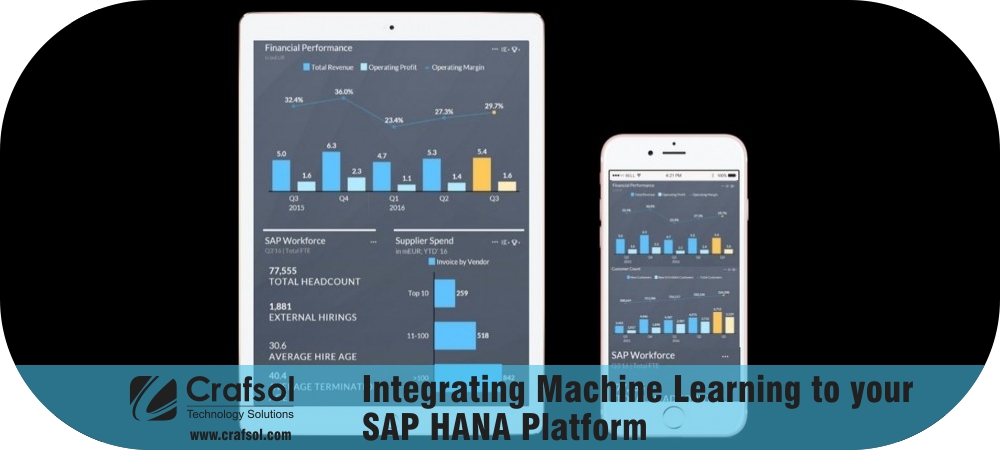
Integrating Machine Learning to your SAP HANA Platform

Artificial Intelligence is one of biggest drivers of today’s digital world. AI has already become the part of our everyday life.

Machine Learning is a subset of AI that empowers the system to automatically learn and improve from experience without being explicitly programmed. The success of Machine Learning depends on the quantum of data. It requires large sets of data augmented with a whole range of algorithms.

As technology advances, enterprises are migrating or have already moved to SAP ERPs, so for better success it is best to sync Machine Learning with your SAP database.

Running Machine Learning algorithms where your data resides—in the database—can help reduce latency and alleviate other delays that arise when copying data to another server.


The tango between Machine Learning and SAP

SAP HANA Predictive Analytics

SAP Hana’s Predictive Analytics provides machine learning capabilities through in-memory database. SAP Hana predictive analytics library (part of AFL) provides data analysts and developers with automated, wizard-driven machine-learning capabilities and it can create algorithms to build predictive models and provide better controls for the data scientist.

PAL also has several algorithms that ML learns and continuously updates for dynamic predictions.

Open-Source Machine Learning

SAP Hana also facilitates open source machine learning frameworks, R integration is one of them. R is an open-source programming language designed for statistical computing and advanced analysis. Users can write R code in HANA and then mix and match those programs with PAL Algorithms.

Main advantage here is that businesses can utilize the power of SAP HANA and user-expertise for scalability as well as performance through R scripts

HANA inbuilt Machine Learning Integration

SAP’s Extended Machine Learning Library (EML) provides machine learning inference on data at rest or in motion. ML models can be built in tens or flow using python packages to build complex deep learning integration.

Deep learning brings in ability to solve complex inspection and build algorithms, Identifies every defect outside if the set tolerance and processes prediction at very fast pace.

Crafsol Technology Solutions has in-depth experience in SAP implementation and has also worked on some of the challenging Machine Learning projects, If you wish to take best advantages of ML from SAP platform, get in touch with our experts.
Machine Learning & AI for Cyber Security

In last decade we have seen great development is Machine Learning, Artificial Intelligence and its impact in everyday lift of Human ecosystem.

AI and ML typically helps machines or systems to automatically learn and improve from experience without being explicitly programmed. ML can build algorithms on data that is classified or unclassified, with partial information or no information been provided.

Cyber security also is one of the area where AI and ML can play pivotal role. lets take an example, if your computer or machine is made able to to decide what is good for it and what is bad for it while accessing, this way one machine itself finds new Malware or Anomalies when it faces for the first time.

AI and ML can be used to build this capability, it can identify and safeguard the systems from ever changing cyber world. Traditional security tools may run short to point out the control the cyber attacks.

Building the system that can fight threats

Malware or Cyber attacks always evolve themselves, hacker constantly build upon their previous works, adding new features, upgrading abilities to crack current systems that are blocking its attacks.
AI coupled with ML learns from the information available from previous attacks (data) and build algorithms to predict, identify and control future ones which can be similar category or style

Layered Defence

Basic principle of Cyber security is creating a defence that layered and is in depth. Keeping everything updated such as constant updates, scanning computers every time and everything user accesses is one thing.

Quickly scanning the content user is trying to access, identifying if it is good or bad is one element that every cyber security tool has in build right now, however time involved in doing it is quite time consuming.

this is exactly AI and ML can make the difference, A properly-trained AI/ML model can deliver decision on good or bad files in just few milliseconds.

Resource optimization

Applying machine learning and artificial intelligence to improve cyber security saves an organisation a considerable amount of time and money that would have otherwise been spent by cyber security experts.

Machine Learning quickly excess large pool of data instantly and learn and analyze from it. Systems generate lot of alerts and unautomated attention can buildup lot of work security team. ML can learn from historical data and create resolution on its own.

Artificial intelligence and machine learning is all set to become one of the front runner of next-generation security, enabling elevated degrees of cyber security.

Crafsol ML and AI services builds highly advanced and customized solutions. We are focused on improvisation of the algorithms after the machines have undergone some experience in identifying objects based on defined attributes which makes our approach unique.

Optimising Customer Support Services with Machine Learning

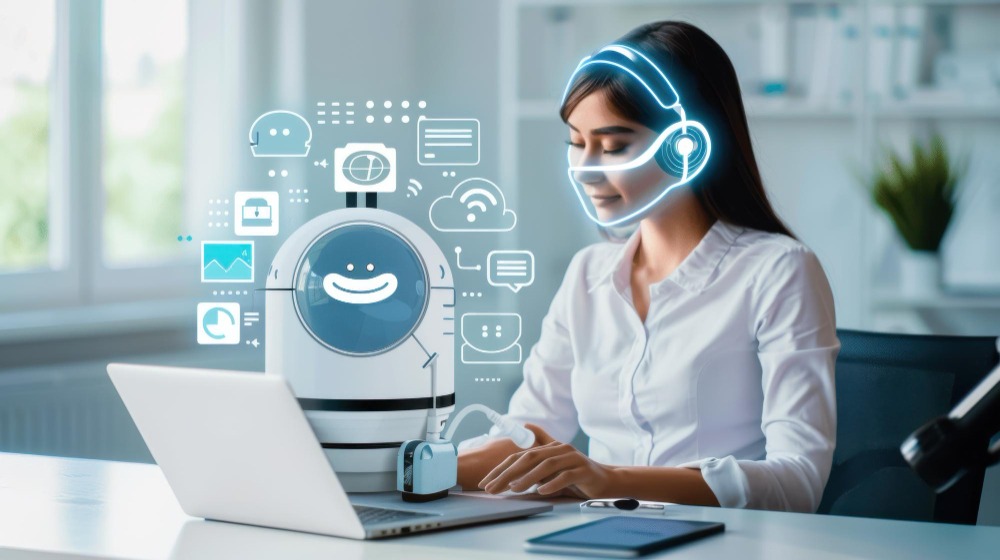
Enterprises have been using Machines to improve efficiency and productivity for long, though it may be advance machinery or shifting to robotics or cobots to further improvement, the need to increase efficiency is consistent. Machine Learning is the next thing which is helping enterprises to use the machines to improve and work more efficiently.

Customer Support is undoubtedly one of the biggest cost centers in modern-day operations, for big or medium scale businesses.

And Customer Support is also considered as one of the most complex parts as well.
Well does it really need to be one? the straight answer is ‘No“

Machine Learning is already set to bring in a major role in resolving challenges in a customer support function.

What is Machine Learning (ML)

ML is one of the parts of artificial intelligence (AI), it is a set of techniques that provides systems or computers an ability to automatically learn without being actually programmed. It can read the data whether it may be structured or unstructured and discover insights.

How does it help in Customer Support


When it comes to Customer support ML provides a higher level of convenience to the customers and efficiency to the support staff.
CS means a lot of data, of which the major part is an unstructured one. This data that is gathered through everyday conversion and communication which contains deep insights, ML when used intelligently can be helpful in understanding the customers, their thinking, wishes and so on.

How is Machine Learning used in the CS environment?

Here are quick top picks

Understanding the Intent

Most of the time your agent does not know why is customer contacting you or where probably he is asking for help.

Machine Learning can help CS agents predict the same. Machine learning collects data about a customer’s previous browsing, geo-events, contact pattern, and other online behaviors. That allows agents to plan and prioritize the customers need. In a way your agent provides personalized services to the connecting customer, assuring elevated user experience.

Timesaving – a win-win situation

Well, what is mostly observed by the researchers, people prefer getting in touch with customer support is through chat or messaging app option. that’s where chatbot comes in the picture.

While, chatbots are something that is equally disliked by people, when used intelligently it can have a greater impact. for instance, if a chatbot can extract what exactly the customer is looking from the text types, further tag it correctly, to direct it right customer support specialist, can bring in a win-win situation for both.

it saves time for the customer, saves time for an agent, reaches the right SME and improves the overall experience

Predictive Service

With IoT, companies are now able to practically track their devices even while the customer is using it. For example, a Smart Machine connected to the internet can send back a signal to the manufacturer when a fault or unusual operation takes place. The manufacturer can get back to owning the company to inform arising issues with the required solution.

Virtual Assistance

Virtual assistance is helping customers during their journey, providing insights to customers as well as feeding the analytic program at the back-end for future reference.

ML can help a enterprises to virtually assist the customer right from buying stage to finding out resolution when he is facing any issue. ML can also help in pushing a product which customer has checked or liked based on his online behavior, it can trigger alerts or updates to the customers.

While these are only a few things listed here, there is a long list where ML can help in optimizing Customer support.
To list a few – customer data capture, classification, proactive emailing, perform root-cause analysis of repetitive instances, reduce interaction time.
Crafsol with its ML and AI services has strong experience of building custom solutions for enterprises.

Get in touch to know more how we can help you in your fasten your customer support services.

https://www.zendesk.com/blog/machine-learning-used-customer-service/
https://freshdesk.com/customer-support/machine-learning-optimizing-customer-support-blog/
https://www.forbes.com/sites/forbestechcouncil/2019/04/24/using-machine-learning-to-improve-customer-service/#298ccf985892
https://www.cognizant.com/perspectives/how-machine-learning-can-optimize-customer-support

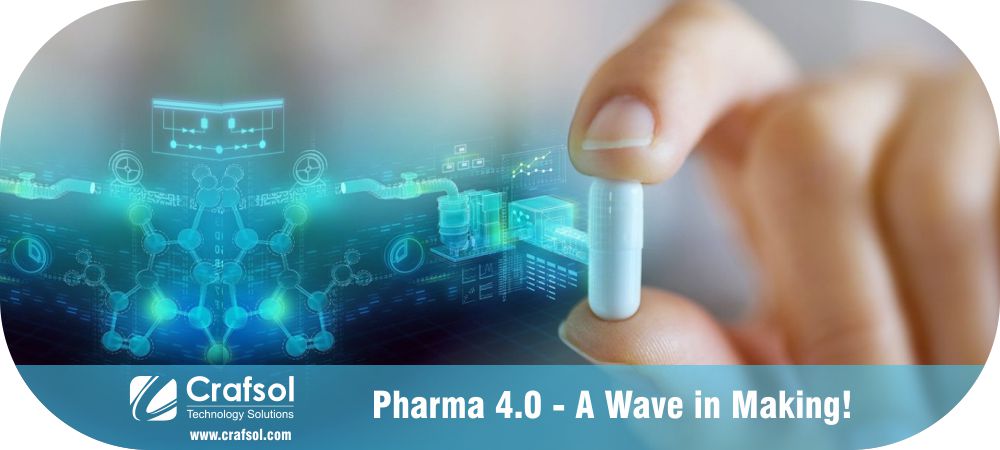
Pharma 4.0 – A Wave in Making!

Industry 4.0 has brought lot of change in many sectors like transportation and logistics, manufacturing, aviation, and oil and gas production. New waive that is coming up is Pharma 4.0 i.e. Implementation of Industry 4.0 in pharmaceuticals

Understanding Pharma 4.0

Similar to Industry 4.0, Pharma 4.0 refers inter-connectivity, automation, integration of AI and ML to make it possible to gather and analyze data across machines, enabling faster, more flexible, and more efficient processes to produce higher-quality goods at reduced costs.

Why to move towards pharma 4.0

Remaining competitive, ensuring to keep market place in tact is pushing pharma manufacturers to improve productivity ensure better control on monitoring. harma 4.0 technology allows for continuous, real-time monitoring of manufacturing processes so any drift away from specified parameters can be predicted and rectified before it turns into a deviation, avoiding the associated down time and loss of product.

Wining over existing control strategies

Pharma industry always had automated process control right from beginning of 90s. But this relatively old system which only alerts when already damage is done. Pharma 4.0 on other hand is proactive in nature. By using sensors and using continuous monitoring techniques, integrated with AI and analytics provides predictive analysis and a world of other business insights that are currently unavailable because they’re buried in unstructured, dispersed, incomplete data.

Role of Big Data

Big data analytics draws data from sources that have traditionally been disconnected from one another, and looks for relationships and trends that were previously undetectable. For example, data from the online inspection system described above can be combined with that from equipment maintenance and engineering systems to streamline maintenance schedules; combining production data with that from sales and dispatch systems can streamline production planning.

How will this transform to a waive

Although pharma is very precautious industry, which requires tighter control and is coupled with very strong statutory norms. However, still Governments, regulators are taking every possible step help enterprises to move towards Pharma 4.0 soon Pharma 4.0 is be waive in itself

Crafsol with its leaders, who have strong understanding of pharmaceutical industry, is ready and keen to help companies to start Pharma 4.0, get in touch with our team now.

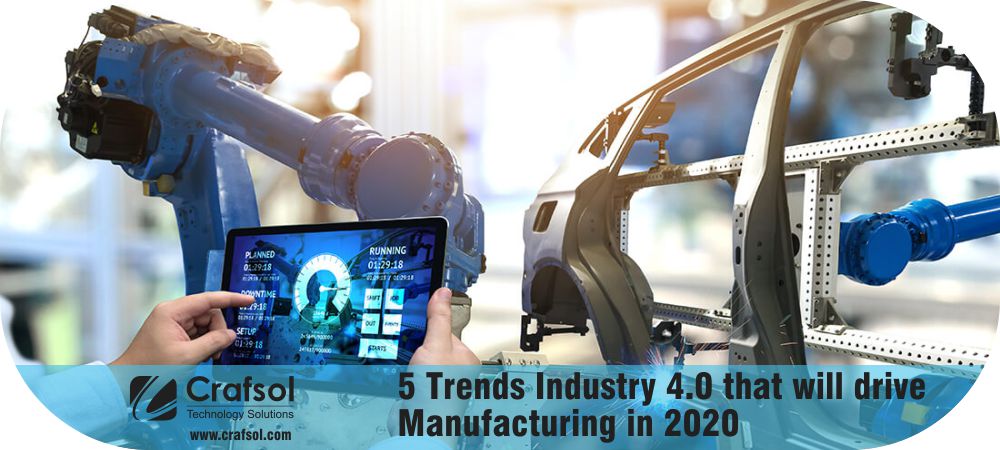
5 Trends Industry 4.0 that will drive Manufacturing in 2020

Industry 4.0 and allied technologies are already driving a huge change when it comes to Manufacturing. Although technologies in manufacturing are advancing at very fast pace industry 4.0 is already to set to take it to the next level.

Industry 4.0 has already benefiting manufacturers by increased visibility into operations, substantial cost savings, faster production times and the ability to provide excellent customer support.
As Competition is growing, The only way manufacturers can stay ahead of competitors and win market share is getting best out of technologies. Those companies who want excel and not just survive are on set to ripe best out Industry 4.0

In this month’s Newsletter we take a look at 5 trends that drive manufacturing in 2020

Digital Twins

Although digital Twin technologies have been around 2003, real utilization is up when IoT came into the picture. Digital twins are virtual replicas of physical devices that data scientists and IT pros can use to run simulations before actual devices are built and deployed. They are also changing how technologies such as IoT, AI and analytics are optimized.

IoT

Manufacturers are already leveraging the benefits of IoT by connecting their existing manufacturing infrastructure to internet using unique devices. In 2020 more and more companies even from SME’s will invest in IoT to leverage more informed decisions to achieve increased efficiency, improved safety, meeting compliance requirements, and product innovation.

Increased use of Cobots

Markets have welcomed Cobots positively and some research show that by 2025 investment in cobots will be 12 billion USD. Cobots create opportunities for manufacturers to improve their production lines, increasing productivity while keeping employees safe. Cobots are compact and affordable and easy to use.

AR & VR

Assistive technologies, such as augmented reality (AR) and virtual reality (VR), will continue to create mutually beneficial partnerships between man and machine that positively impact manufacturers. These technologies help businesses work more effectively while also making them more efficient. Helping in several ways like product design, production line development, driving OEE improvements, technical and engineering support, training, team collaboration, inventory management, and more.

Smart Factories

Businesses, to stay competitive, are striving hard to make their production lines more efficient, effective and utilize the resources to fullest all this to achieve better productivity.

The smart factory represents a leap forward from more traditional automation to a fully connected and flexible system—one that can use a constant stream of data from connected operations and production systems to learn and adapt to new demands.

While above is just a quick list of trends that will be seen in next year, it does show the opportunities that exist in 2020 and beyond for manufacturing companies with a forward-thinking and innovative outlook.

Want to know more about how Crafsol can help you?
Get in Touch.

What’s the linkage between ERP and BI?

In ERP the entire focus is on automation or efficiency improvement. BI is more about improving performance. The top management has to question the current reality. For example, if revenues/sales person are Rs. 1 Cr., Can I make it 1.25 Cr. And if I want to do it what should I do?

You talk about incentives, training etc. We suggest you give him intelligence and the impact on his her performance could be highest. BI is the case for empowering people to perform better and without the empowerment, training and incentives will produce only partial results.

But there is skepticism about BI. This will go away in near future like it happened with ERP. Today, it is rare to see people who argue about the need for having ERP software. For any new plant that is being put up the boiler, generator and ERP investments are put at par. Unfortunately, in case of BI there is no physical system like ERP. BI starts with a proposition
like – can I bring in a 25% reduction in your inventory. It’s a conceptual thing and often it is relatively difficult to visualize the end outcome. Also, end outcome is dependent upon action taken based on BI. Therefore it is difficult to assign the ‘credit’ to BI.

Data driven decisions or your gut feel?

If you can see the performance of the organization with naked eyes, you don’t need BI. For example, the owner of a south Indian restaurant doesn’t need BI because he is observing the performance in run-time. In restaurants, performance can be dramatically improved by earning more revenue per table/hour or by getting the customer to spend more. The owner is able to see and control the situation in runtime.

Now imagine, if the same guy had seven restaurants across various locations. All his managers at other restaurants may not be equally competent as the owner and that is where BI can play a role. Another daily life example would be a medical shop. A pharmacist once told me he keeps twenty days of inventory. He was using simple billing software. Although, the data could be seen with naked eyes, with four thousand items in inventory, it was almost impossible to really
identify the excess inventory in the shop.

BI is useful where performance or data is not visible with naked eyes (because you are at a distance) or the data is too complex to be analyzed purely in one’s mind. Also, BI is not advocated to replace gut feel; but gut feel decisions can definitely be far more effective after studying the facts rather than without the facts; won’t you agree?

Who needs Business Intelligence (BI) and Analytics?

To draw an analogy from the medical world, BI is not a medicine for a disease. It It’s more like a tonic.
Off course, if there is a disease, meaning a problem, it will help. The cause of disease in any organization cannot be lack of data analysis. Medicine is to remove the disease. Tonic is to remove the weakness induced by the disease.

Challenge the norms!

From a framework perspective, companies which are stagnating or certain departments/people within the company who are stagnating, would do very well with use of BI.

Stagnating, in terms of daily work, can be defined as a situation where people accept some failure rate as normal. For example, if you meet 100 prospects and 10 are converted to customers, you say, these are good results because traditionally you have never done better. Similarly, in a manufacturing environment a particular rejection rate, over a period of time, becomes a norm. But if break-through performance is to be achieved, these norms need to be challenged.

BI will help you to find ways to where you are failing, why you are failing and how to improve the performance.